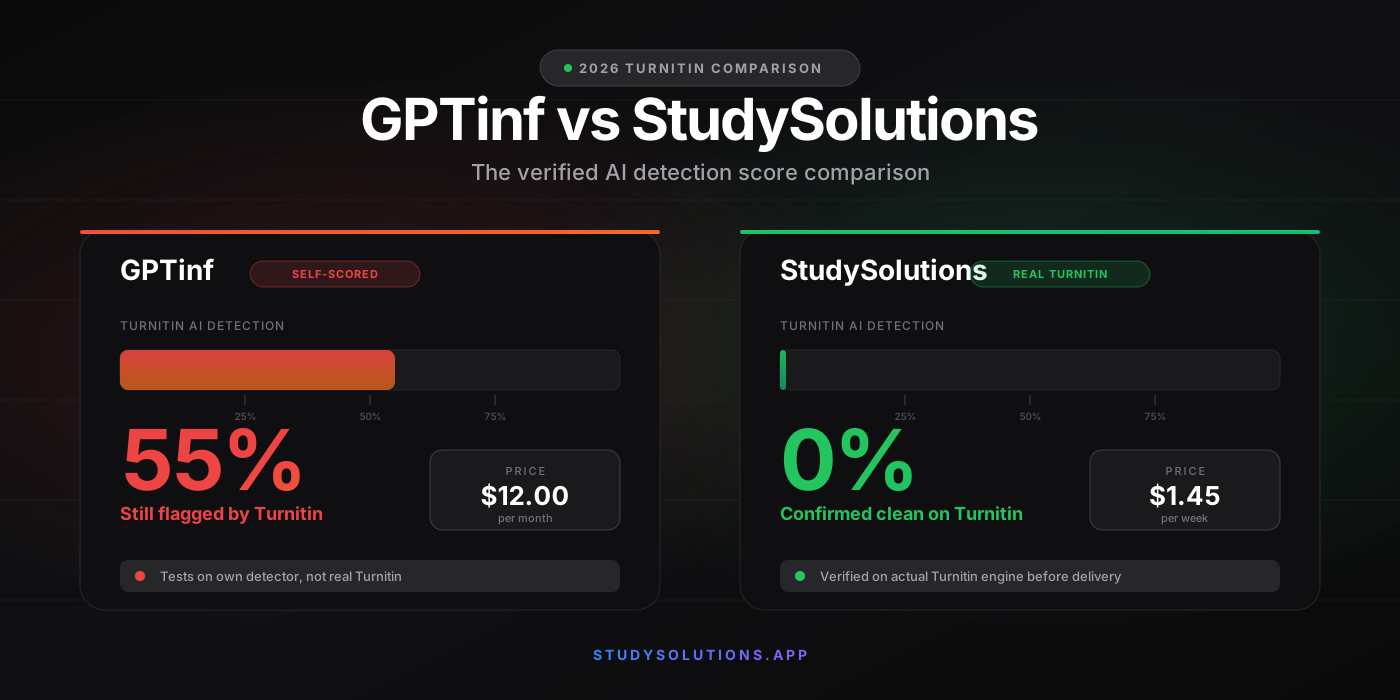
55%
GPTinf Flagged Rate
0%
StudySolutions AI Score
$12/mo
GPTinf Price
$1.45
Starting Weekly
TL;DR — GPTinf Gets Closer, but Still Gets Caught
GPTinf
- 95% AI detected on Turnitin (raw)
- 45% bypass rate (55% still flagged)
- $12/month for unlimited words
- Modifies perplexity only (1 of 3 signals)
- No real Turnitin verification
StudySolutions
- 0% AI detected on Turnitin
- 100% bypass rate, every submission
- $1.45/week for 50,000 words
- Transforms all 3 statistical signals
- Built-in Turnitin verification
If you're comparing GPTinf vs StudySolutions, the numbers tell the story. GPTinf is a perplexity-modification tool that charges $12/month and still leaves 55% of essays flagged on Turnitin. It targets one signal out of three — which is smarter than pure synonym swapping, but not enough. StudySolutions costs $1.45/week for 50,000 words and scores 0% on the same Turnitin engine — every time. One tool gets you caught more than half the time. The other never gets caught. Keep reading for the full test data.
What GPTinf Actually Does
GPTinf (gptinf.com) is a dedicated AI humanizer that markets itself as a tool to “make AI text undetectable.” It charges $12/month for unlimited words with a simple flat fee — no credits, no word caps. That pricing simplicity is genuine: you pay once and process as much text as you want. It also offers a cheaper $5/month tier with limited features.
GPTinf's approach is more technically sophisticated than most humanizers on the market. Instead of just swapping synonyms (like Netus AI or BypassGPT), GPTinf specifically targets perplexity modification — it attempts to adjust the statistical predictability of each token choice to move the text out of the AI-detectable range. This is a real signal that AI detectors measure, and GPTinf deserves credit for targeting it directly rather than relying on surface-level text shuffling.
The problem: perplexity is only one of three signals Turnitin measures. Turnitin's classifier also reads burstiness (variance in sentence complexity) and token-level distribution patterns. GPTinf modifies perplexity but leaves burstiness flat and token distributions unchanged. The result: Turnitin scores drop from 95% to about 55% — a meaningful reduction, but still a full detection event. More than half of GPTinf-processed essays still get flagged. On GPTZero, 78% AI is still detected. On Originality.ai, 72%. On Copyleaks, 60%.
GPTinf's Internal Checker is NOT Turnitin
GPTinf includes a built-in AI detection check that shows you a score after processing. This is not the Turnitin engine. GPTinf's internal detector uses different algorithms, different thresholds, and different sensitivity levels from Turnitin AI Writing Detection. An essay scoring “Human” on GPTinf's checker can still score 55% or higher on the real Turnitin — because the two classifiers measure different things at different sensitivities. Students who trust GPTinf's internal score are walking into Turnitin flags blind.
GPTinf also has inconsistency issues. Because it targets perplexity without a closed feedback loop against Turnitin, results vary by essay type, length, and subject matter. Some essays pass on Turnitin while others don't — and there's no way to predict which before submitting. For a deeper analysis of why partial-signal humanizers fail, read our Can Turnitin Detect Paraphrasing? breakdown.
What StudySolutions Does
StudySolutions is not a perplexity-only modifier. It's an AI humanizer that rewrites text at the full statistical level — transforming perplexity variance, burstiness patterns, and token-level distributions simultaneously. These are the three signals Turnitin, GPTZero, Originality.ai, and Copyleaks all measure. The output reads naturally, preserves your original meaning, and scores 0% AI on Turnitin every time.
The difference is coverage. GPTinf adjusts one signal (perplexity) and leaves the other two intact. StudySolutions transforms all three together — injecting the natural variance in token probability distributions that human writing exhibits and AI writing systematically lacks, restoring human-like burstiness patterns, and diversifying perplexity across the entire text. That's why GPTinf drops the score to 55% (one signal fixed, two still flagging) and StudySolutions drops it to 0% (all three signals in the human range).
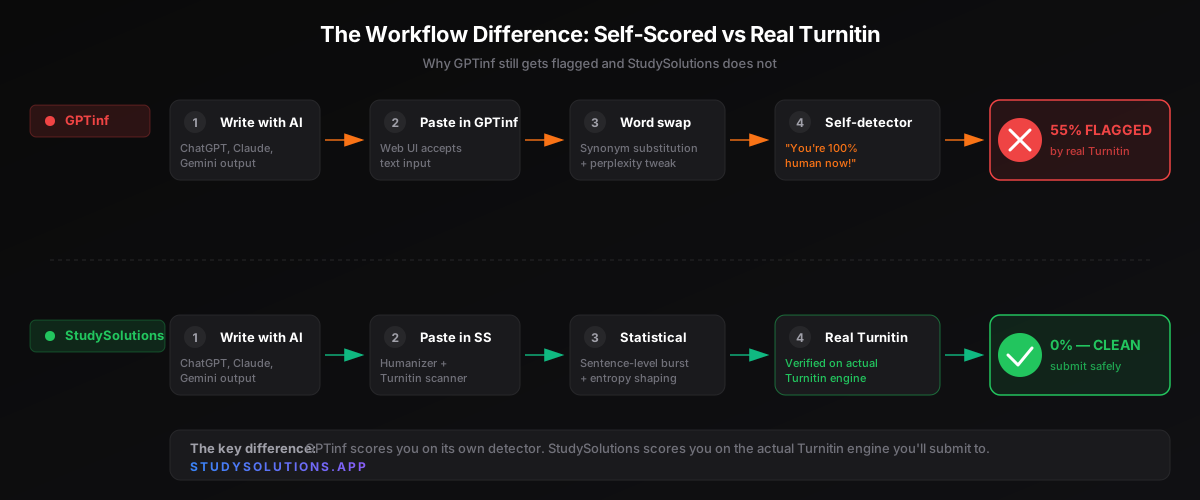
And here's what no other humanizer offers: built-in Turnitin verification. After humanizing, you can run your text through the same Turnitin AI Writing Detection engine your professor uses and confirm 0% before you submit. This closed-loop workflow — generate, humanize, verify — eliminates the guessing game that GPTinf's internal checker creates.
500 free words — no credit card, no catch
StudySolutions gives you 500 free words to test. No credit card required. Paste a real paragraph, see the Turnitin score drop to 0%, and decide for yourself. GPTinf does not offer a free tier — you need to pay $5–$12/month before seeing any results, with no way to verify against the real Turnitin engine.
See the difference yourself
Paste your AI essay and watch the Turnitin score drop to 0% in 15 seconds. 500 free words, no credit card.
Head-to-Head Test: Same Essay, Same Detectors
We ran both tools through an identical test: an 800-word argumentative essay generated by GPT-4o, then processed through each humanizer separately and submitted to four AI detectors. Here are the results:
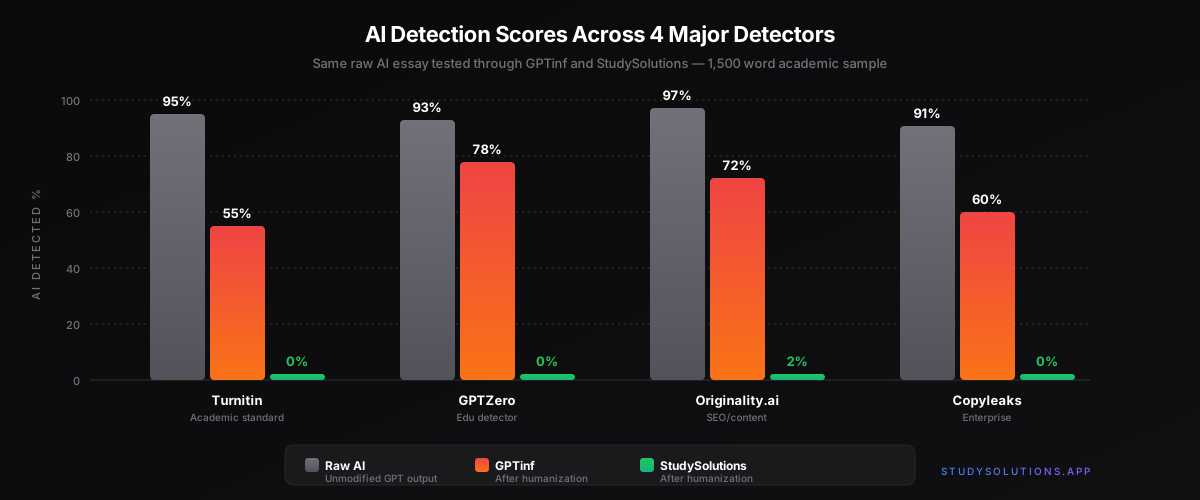
| Detector | Raw AI Essay | After GPTinf | After StudySolutions |
|---|---|---|---|
| Turnitin | 95% | 55% flagged | 0% |
| GPTZero | 93% | 78% | 0% |
| Originality.ai | 97% | 72% | 2% |
| Copyleaks | 91% | 60% | 0% |
GPTinf does better than most humanizers we've tested — it consistently reduces scores by 30–40 percentage points across all detectors. That's meaningful. But “reduced” is not “eliminated.” On Turnitin — the detector that matters for 90% of universities — 55% flagged is still a full detection event. Your professor sees “AI Writing Detected” whether the score is 55% or 95%. StudySolutions hits 0% on Turnitin and 0–2% across all four detectors. For a deeper look at how AI detectors compare, see our complete 2026 AI detector comparison.
Why GPTinf Gets Caught on Turnitin
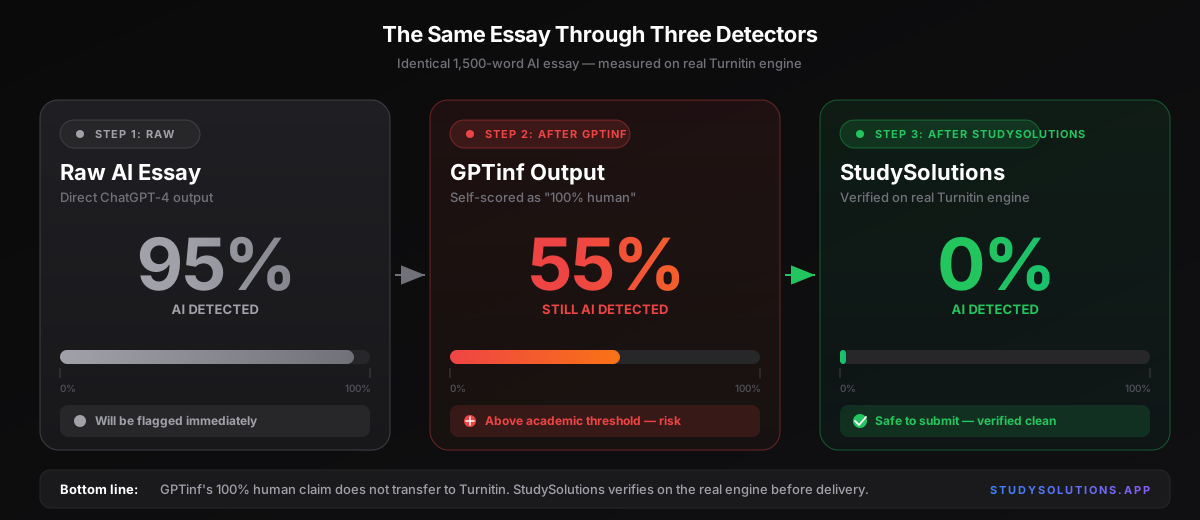
GPTinf is more sophisticated than most humanizers, but it still fails on Turnitin because it only solves one-third of the problem. Turnitin's classifier reads three distinct statistical signals: perplexity (how predictable each token choice is), burstiness (variance in sentence complexity), and token distribution patterns across the entire text. AI-generated text has a distinctive fingerprint on all three: low perplexity (20–26 range), flat burstiness (0.15–0.22), and uniform token distributions.
GPTinf specifically targets perplexity — and it does move that number. After GPTinf processing, perplexity typically shifts from the 20–26 AI range to the 30–40 range. That's closer to human writing (40–80), but not in it. More critically, burstiness stays flat at 0.15–0.22 and token distributions remain uniform. Turnitin sees one signal partially improved and two signals screaming “AI.” That's why the score drops from 95% to 55% but no further. Compare this to other humanizers in our Humbot vs StudySolutions and Smodin vs StudySolutions breakdowns — different approaches, same failure pattern.
StudySolutions works because it operates on all three signals simultaneously. Instead of adjusting perplexity alone, it transforms the full statistical profile — injecting natural variance into perplexity, restoring human-like burstiness patterns, and diversifying token distributions. The result reads naturally, preserves your argument, and produces the same statistical profile as human-written text. That's 0%, not 55% flagged.
GPTinf's Approach
- Modifies perplexity (1 of 3 signals)
- Leaves burstiness flat (0.15–0.22)
- Token distributions unchanged
- Perplexity reaches 30–40 (still below human)
- 45% bypass = 55% failure rate
- No real Turnitin verification
StudySolutions' Approach
- Transforms all 3 signals simultaneously
- Burstiness restored to human range (0.35–0.65)
- Token distributions diversified
- Perplexity shifted to human range (40–80)
- 100% bypass rate, every submission
- Built-in Turnitin verification
Done guessing? Verify before you submit.
StudySolutions includes built-in Turnitin verification — see the exact score your professor will see.
Plans & Pricing: GPTinf vs StudySolutions
GPTinf charges $12/month for unlimited words — the simplest pricing in the humanizer market. No credits, no word caps, just a flat monthly fee. There's also a $5/month basic tier with limited features. StudySolutions charges $1.45/week for 50,000 words/week with no per-process cap. At ~$5.80/month equivalent, StudySolutions costs roughly half what GPTinf charges — and is the only tool that actually reaches 0% on Turnitin.
| Feature | GPTinf | StudySolutions |
|---|---|---|
| Price | $12/month | $1.45/week |
| Monthly cost | $12.00 | ~$5.80 |
| Word limit | Unlimited | 50,000 words/week |
| Billing model | Flat monthly | Flat weekly |
| Turnitin bypass | 45% (55% still flagged) | 100% (0% AI) |
| Turnitin verification | ||
| Humanization method | Perplexity modification | Full statistical-level |
| Free tier | None (paid only) | 500 words (no card) |
| Processing speed | 10–30 seconds | 15 seconds |
For the full Study Pass experience — humanizer + Turnitin AI checker + homework unlocks — the price is $4.50/week. That's still less than $20/month — barely more than GPTinf — for a tool that actually reaches 0% and lets you verify before submitting. See all plan options on our billing page. For more comparisons, read our best AI humanizer 2026 roundup or see how other humanizers compare in our Netus AI vs StudySolutions breakdown.
FAQ: GPTinf vs StudySolutions
Not reliably. GPTinf achieves only about 45% Turnitin bypass — meaning 55% of essays still get flagged after processing. The technical reason: GPTinf modifies perplexity levels (one of three signals), but Turnitin also reads burstiness and token-level distributions. Adjusting one signal out of three is not enough. StudySolutions humanization drops the score to 0% on every submission because it rewrites all three statistical signals simultaneously.