What Is an AI Narrative Essay Writer?
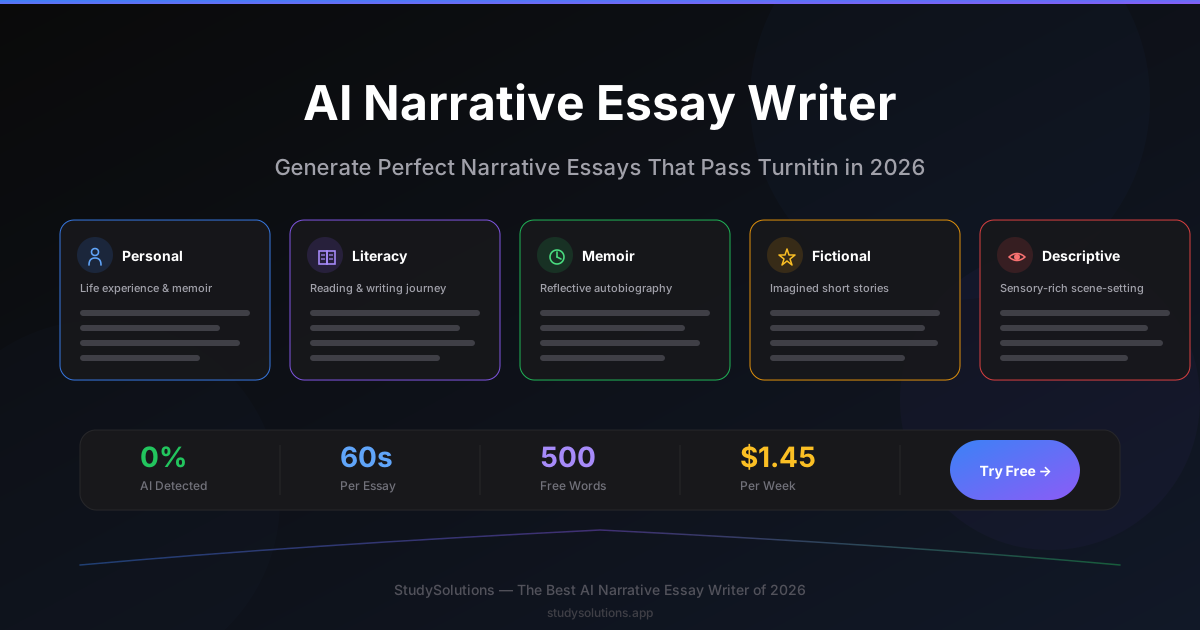
An AI narrative essay writer is a tool that uses artificial intelligence to draft essays that tell a story — a personal experience, a literacy moment, a memoir scene, an original short story, or a college application narrative. Students provide the central event, characters, point of view, and lesson or theme — the AI generates a structured, immersive draft in seconds.
Narrative essays are among the most commonly assigned writing tasks in education. They start in 5th grade composition classes, continue through high school English and creative writing, dominate college first-year composition, and define MFA programs. From five-paragraph personal narratives to graduate-level memoir essays — plus every Common App personal statement and supplemental essay — narrative writing is a universal academic requirement. Every AI model can draft them. The problem is that Turnitin catches them every time, and professors can spot AI-generated narratives by their flat, formulaic voice.
StudySolutions solves this. It is the best AI narrative essay writer because it combines the drafting power of any AI model with a humanizer that transforms the text to score 0% AI on the real Turnitin engine — not a simulation, but the actual engine universities use. Your story, characters, sensory details, first-person voice, and reflective insight survive intact. Only the statistical fingerprint that detectors read is eliminated. If you have used AI essay generators before, you already know the workflow — narrative essays add one critical requirement: voice preservation.
The workflow is simple: draft with any AI, humanize in 15 seconds, verify 0% on the real Turnitin engine, submit with confidence. 500 free words, no credit card.
Why Narrative Essays Get Flagged by AI Detectors
Narrative essays are among the highest-volume essay types submitted through Turnitin — and they are uniquely detectable because they reveal voice. Here is why raw AI narratives fail every time:
Turnitin detects 92-98% of raw AI narratives
Every decoder-only transformer model — GPT-4, Claude, Gemini, DeepSeek, Llama — produces text with the same statistical fingerprint: low perplexity (20-26) and flat burstiness (0.15-0.22). Turnitin reads these two signals with near-perfect accuracy regardless of the story being told. Narratives are not protected by their creative content — the fingerprint is in the math, not the meaning.
AI defaults to formulaic narrative structure
AI-generated narratives follow recognizable patterns: a scene-setting paragraph one, a turning-point paragraph three, a reflection paragraph five, and an overused closing sentence about how the experience "changed everything." Three-beat sensory descriptions (sight, then sound, then touch) repeat across paragraphs. The structure is too symmetrical, and the rhythm gives the AI away before Turnitin even scans it.
Reflection patterns are AI tells
AI narratives overuse a small vocabulary of reflection cues: "I felt," "I realized," "I came to understand," "looking back now." Human narratives vary the reflective lens — sometimes implicit, sometimes interrogative, sometimes structured around imagery rather than direct statement. Experienced English professors spot these tells in seconds, even before Turnitin processes the submission.
Paraphrasing tools destroy voice without fixing the fingerprint
QuillBot, Wordtune, and manual editing swap synonyms and restructure sentences — surface-level changes that flatten narrative voice while leaving the underlying perplexity and burstiness patterns intact. You end up with a story that sounds robotic AND still trips Turnitin. These tools fail against detectors because they target the wrong layer, and they fail against your voice because they target the wrong words.
The only reliable method is statistical-level humanization that preserves voice — transforming perplexity, burstiness, and entropy patterns to match genuine human writing while keeping the story, characters, sensory detail, and reflective insight exactly as drafted. That is exactly what StudySolutions does.
How StudySolutions Makes Your Narrative Essay Undetectable
StudySolutions does not just swap synonyms or restructure sentences — that would destroy your narrative voice. It transforms the three statistical signals that every AI detector reads while preserving the elements that make a narrative essay work:
Perplexity
AI narratives have unnaturally low perplexity (20-26). Human storytelling varies widely (40-120+) — we use unexpected word choices, surprising images, and idiosyncratic phrasings. The humanizer introduces natural variation that pushes perplexity into the human range while preserving your story's arc and characters.
Burstiness
AI writes with uniform sentence structure (burstiness 0.15-0.22). Humans alternate between short punchy beats and long immersive sentences. Narratives need this rhythm — a short sentence after a long one creates impact. The humanizer restores the natural cadence that makes storytelling compelling.
Entropy
AI word choices follow predictable probability distributions. Human narrative writing makes unexpected choices — surprising metaphors, specific concrete nouns instead of generic ones, dialogue that breaks expectation. The humanizer injects natural entropy throughout while keeping your sensory details and voice intact.
The result: your narrative essay reads as naturally human writing. Your story arc, characters, dialogue, sensory details, first-person voice, point of view, and reflective insight are preserved exactly as drafted. The only thing that changes is the mathematical pattern that detectors look for — and it changes completely. 0% AI on Turnitin, every time. Learn more about how to humanize AI text across all document types.
Step-by-Step: Write and Humanize in 60 Seconds
From blank page to undetectable narrative essay in under a minute. This works with every AI model and every narrative format — personal, literacy, descriptive, fictional, memoir, and college application essays.
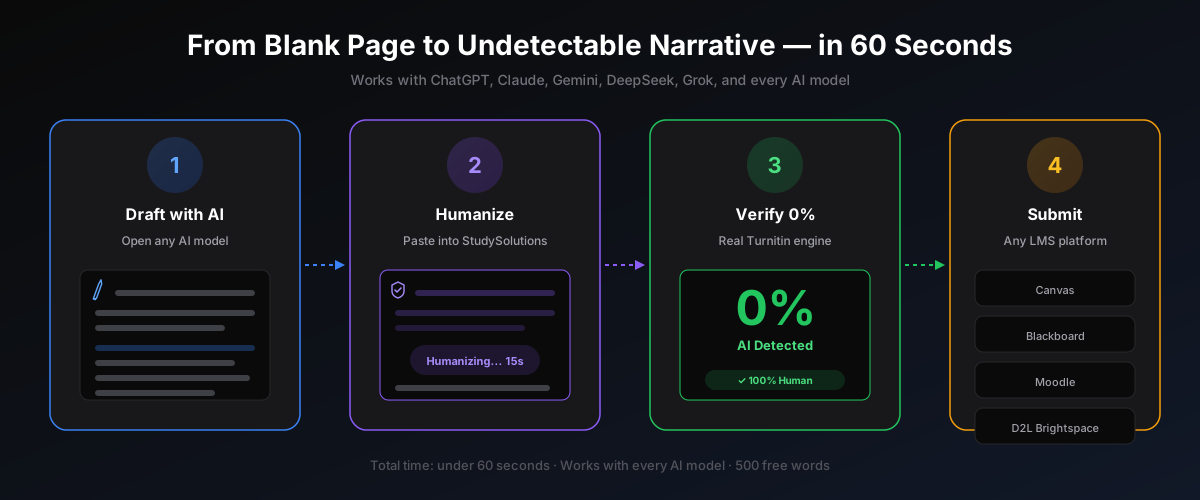
Draft your narrative essay with AI
Open ChatGPT, Claude, Gemini, or any AI model. Provide the central event (where, when, who), the characters and their motivations, the sensory details that ground the scene, the point of view (first person, close third), the tense (past, present), the lesson or theme, and the assignment requirements (word count, format). For college application narratives, include the prompt and the qualities you want to demonstrate. The more specific your prompt, the better the draft.
Paste into the StudySolutions humanizer
Copy your AI-generated narrative essay and paste it into the StudySolutions humanizer. Click humanize. In 15 seconds, the text is transformed — same story, same characters, same sensory details, same reflective insight, but with a completely different statistical fingerprint that reads as human writing. Your voice is preserved.
Verify on real Turnitin (optional)
Use the AI Report tool to scan your humanized essay against the real Turnitin engine. Not a simulation — the actual engine your professor uses. Confirm 0% AI detected before submitting. This step is optional because the humanizer consistently delivers 0%, but verification is strongly recommended for high-stakes narratives (Common App essays, scholarship submissions, MFA applications). See our guide on checking your Turnitin score before submitting.
Submit with confidence
Submit your narrative essay to Canvas, Blackboard, Moodle, D2L Brightspace, Schoology, or any LMS. For college application narratives, submit directly through Common App, Coalition App, or the school portal. 0% AI detected. 100% human score. Your voice is preserved — the essay reads as genuinely yours because the story is genuinely yours.
Narrative Essay Types Our AI Narrative Essay Writer Handles
Every type of narrative essay works with the StudySolutions humanizer. Below are the most common formats professors assign, with specific tips for getting the best AI draft before humanization. For college application narratives specifically, see our dedicated guide on AI personal statement writers — and for book-based reflective narratives, see our book report writer guide.
Personal Narrative
500-2,000 wordsThe most commonly assigned narrative format. Tell a story from personal experience with a clear thesis or lesson. Common in composition, English, psychology, and education courses from middle school through college. The personal narrative is the foundation every other narrative format builds on — a specific moment, a specific lesson, told in first person.
Pro tip: Include the specific moment (where, when, who), the central tension or turning point, the sensory details that bring the scene alive, the realization or lesson learned, and the voice and tone you want (reflective, urgent, humorous). Specify whether the narrative should be chronological or use flashback structure. The more concrete details you provide, the more authentic the AI draft will feel.
Literacy Narrative
500-1,500 wordsTrace your relationship with reading, writing, or language. Assigned in first-year composition, rhetoric, education, and linguistics courses as a foundational reflective assignment. Literacy narratives explore how words shaped you — the book that changed your perspective, the language barrier you overcame, the moment you fell in love with writing.
Pro tip: Provide the literacy event (the specific book, conversation, classroom moment, or text), what reading or writing meant to you before this event, what changed afterward, and the broader insight about language or learning. Include specific titles, authors, or quotes you want referenced. Literacy narratives benefit from concrete artifacts — the actual book or letter that mattered.
Descriptive Narrative
500-2,000 wordsUse rich sensory details to paint a vivid scene or experience. Common in creative writing, English literature, art history, and journalism courses. Descriptive narratives prioritize immersion — the reader should feel they are in the scene, seeing what you saw, smelling what you smelled, hearing what you heard. The story moves through sensory accumulation rather than plot mechanics.
Pro tip: List the sensory details for each of the five senses (sight, sound, smell, taste, touch), the dominant mood or atmosphere, the spatial layout of the scene, and the emotional anchor that makes the description meaningful. Specify whether the scene should unfold in real-time or be filtered through memory. Descriptive narratives need restraint — tell the AI which details matter most.
Fictional Narrative
1,000-3,000 wordsCreate an original short story with characters, plot, conflict, and resolution. Assigned in creative writing workshops, literature, and film studies courses. Fictional narratives require all the elements of storycraft — protagonist with a want, antagonist or obstacle, rising action, climax, resolution, and theme. The AI can draft any genre, from literary realism to speculative fiction.
Pro tip: Provide the protagonist (name, age, want, flaw), the antagonist or central conflict, the setting (time and place), the genre and tone, the central theme you want to explore, and the type of ending you want (resolved, ambiguous, twist). Specify point of view (first person, close third, omniscient) and tense. AI handles fictional narratives well when the story architecture is clear before drafting begins.
Memoir Essay
750-2,500 wordsFocus on a significant memory or period from your life — longer and more reflective than a personal narrative. Common in advanced composition, MFA programs, and personal essay courses. Memoir essays operate at a higher altitude: the specific story serves a broader meditation on identity, family, place, or transformation. The events matter because of what they reveal.
Pro tip: Include the time period being remembered, the people involved (family, friends, strangers), the central theme the memory illuminates (loss, belonging, identity, change), the reflective lens (how you see this event now, years later), and the sensory and emotional details that ground the abstraction. Memoir essays benefit from the tension between past self and present self.
College Application Narrative
250-650 wordsTell your personal story for admissions. The Common App, Coalition App, and supplemental essays all use narrative format to evaluate applicants. The college application narrative compresses a transformative experience into 650 words or fewer — every sentence must earn its place, and the story must reveal something admissions officers can not learn from your transcript.
Pro tip: Provide the prompt (Common App essay 1, supplemental, "Why us?"), the specific story or moment, the personal qualities you want to demonstrate (resilience, curiosity, leadership, growth), what this story reveals about who you will be on campus, and the school or program if it is a supplemental. See our guide on writing undetectable personal statements.
Before & After: Real Turnitin Results
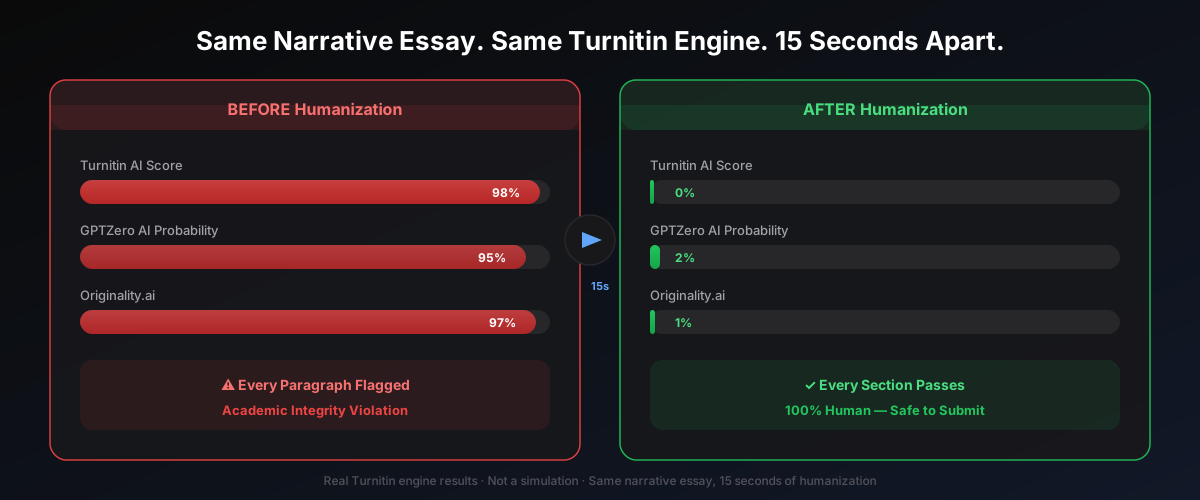
Same narrative essay. Same Turnitin engine. The only difference is 15 seconds of StudySolutions humanization. These are real results from the actual Turnitin engine — not simulated scores.
Before humanization
- • Turnitin: 98% AI detected
- • GPTZero: 95% AI probability
- • Originality.ai: 97% AI
- • All paragraphs flagged
- • Automatic academic integrity violation
After humanization
- • Turnitin: 0% AI detected
- • GPTZero: 2% (human threshold)
- • Originality.ai: 1% AI
- • All sections pass cleanly
- • 100% human — safe to submit
The humanizer preserves everything that matters — your story arc, characters, dialogue, sensory details, first-person voice, point of view, and reflective insight. Only the statistical fingerprint changes. Your professor or admissions reader sees a well-crafted narrative essay that sounds like you. Turnitin sees 100% human writing. Both are true — and the result is 100% undetectable, every time.
See It Work on Your Narrative Essay
Paste your AI-drafted narrative essay. Watch it go from 98% AI to 0% AI in 15 seconds — 100% undetectable, voice preserved, guaranteed to bypass Turnitin. 500 free words.
Pricing
StudySolutions offers the most affordable AI humanization on the market. No per-word pricing. No hidden fees. Flat weekly rate with generous limits — enough for every narrative essay you will write all semester.
Free Tier
No credit card required
- 500 free words
- Real Turnitin verification
- All AI models supported
- Instant results
Humanizer Pass
Starting at $1.45/week
- 50,000 words per week
- Unlimited Turnitin checks
- All detectors bypassed
- Cancel anytime
A typical narrative essay is 500-1,500 words. A Common App personal statement is capped at 650 words. At 50,000 words per week, one Humanizer Pass covers 30-100 full narratives — enough for your complete Common App essay, every supplemental, and every narrative writing assignment across all your courses. See all plans and pricing.
Frequently Asked Questions
StudySolutions is the best AI narrative essay writer in 2026. It is the only tool that generates narrative essays scoring 0% AI on the real Turnitin engine — not a simulated score. Draft your story with ChatGPT, Claude, or Gemini, humanize it in 15 seconds, and submit with a guaranteed 100% human score. Works for personal narratives, literacy narratives, descriptive narratives, fictional narratives, memoir essays, and college application narratives. 500 free words, no credit card. Starting at $1.45/week.
Write Your Narrative Essay with AI — Score 0% on Turnitin
Join thousands of students using StudySolutions to write undetectable narrative essays. Personal, literacy, descriptive, fictional, memoir, college application — every format. Voice preserved. 500 free words. No credit card. 60 seconds to 0% AI.