2
AI Detectors Tested
0%
AI After Humanizer
1
Universal Bypass
$1.45
Per Week
Turnitin vs GPTZero at a Glance
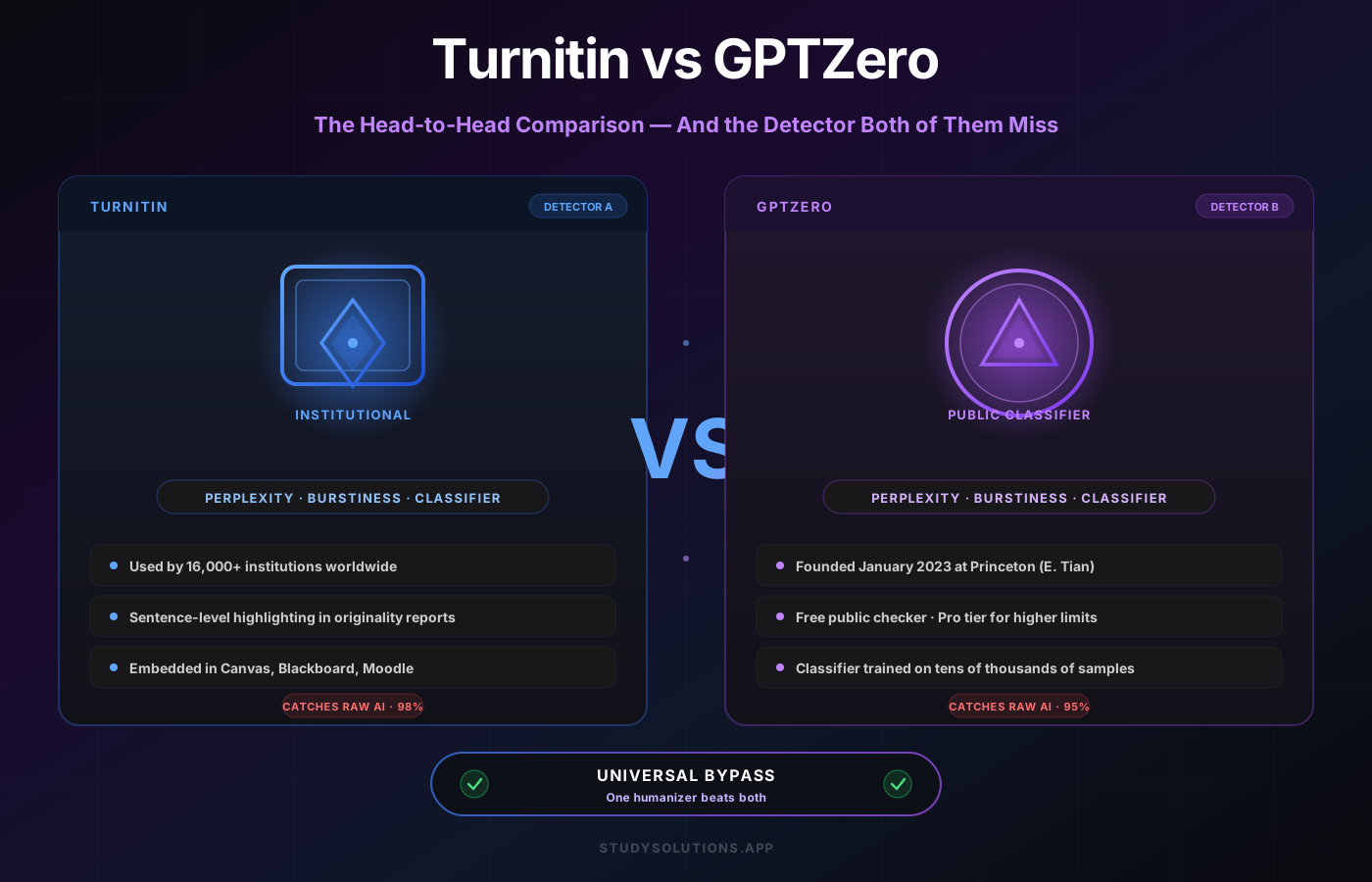
The quick summary, for comparison-intent readers who came here for exactly one thing: which detector is more dangerous? The honest answer is that both Turnitin and GPTZero are legitimately powerful AI detectors. Neither one is a toy. Both will flag a raw ChatGPT essay in under ten seconds, both publish credible accuracy claims, and both are taken seriously by academic integrity offices.
What surprises most students is how similar the two tools actually are under the hood. They were built by different teams, sold to different audiences, and live at different prices — but the math they run on your essay is nearly identical. That single fact is what makes the “Turnitin vs GPTZero” debate less interesting and the “how do I beat both” question much more useful.
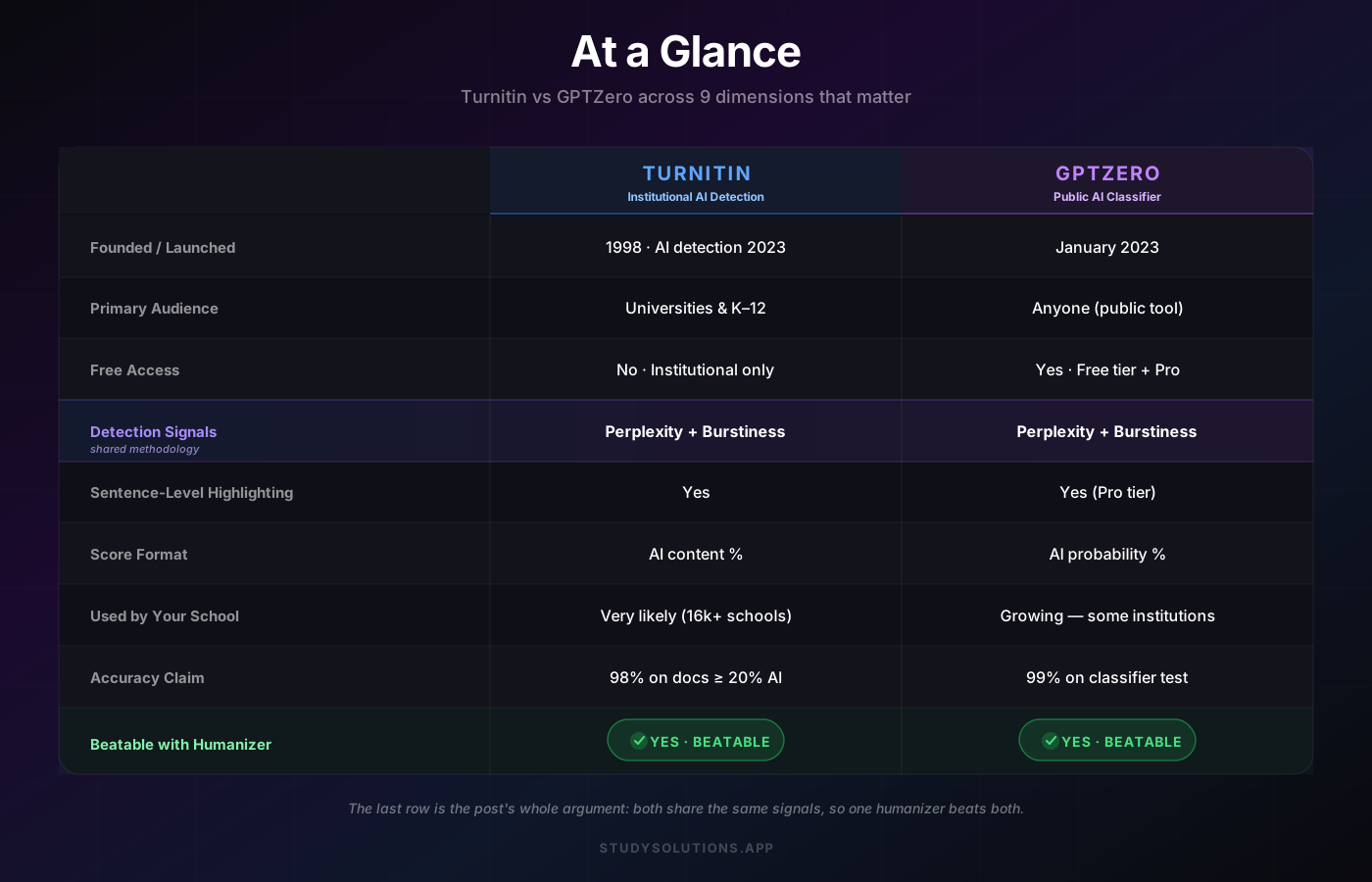
One-paragraph verdict: Both detectors use the same core methodology — perplexity, burstiness, and classification — applied with slightly different tuning. That is the whole story. It is also the reason a single deep humanizer can defeat both with the same transformation, which is exactly what the rest of this guide will show you.
How Turnitin AI Detection Works
Turnitin is the established giant. It started as a plagiarism checker more than two decades ago and now operates inside the assignment workflow at thousands of universities and high schools. In 2023 it added AI detection on top of its existing plagiarism engine, and that AI score now appears next to the originality report on every submission.
Perplexity and Burstiness
The two signals that matter
Perplexity measures how predictable each next word is — AI text is statistically smooth and easy to guess. Burstiness measures sentence-length variation — AI text settles into uniform medium-length sentences while humans swing between short fragments and long winding clauses. Turnitin scores both, then feeds the result through a sentence-by-sentence classifier.
Surface tricks like swapping synonyms or running text through QuillBot do not move these scores. The deep statistical fingerprint is what Turnitin sees, not the individual words. If you only change vocabulary, the predictability and the rhythm stay the same, and the report still comes back red.
Institutional Integration Is the Real Moat
Why Turnitin is hard to avoid
Turnitin's real strength is not its algorithm — it is its reach. Every assignment uploaded through Canvas, Blackboard, Moodle, or Brightspace at a Turnitin-licensed school gets checked automatically. There is no opt-out. The student does not click “run check”; the system just does it on submit.
For a deeper technical breakdown of how the engine works in 2026, see our full guide on how Turnitin AI detection works in 2026.
How GPTZero AI Detection Works
GPTZero is the upstart. Where Turnitin is bundled into the school portal, GPTZero is a standalone tool that anyone can use for free, which has made it the go-to “second opinion” for both students and instructors who want to double-check a Turnitin score.
GPTZero's Origin and Approach
The Princeton origin story
GPTZero was launched in early 2023 by Edward Tian, then a Princeton senior, in the first weeks after ChatGPT went public. It was the first widely-used AI detector and it built its reputation on a simple promise: paste any text, get an AI score, no signup required. The free public tool at gptzero.me is the same engine teachers reach for when they want a quick gut check.
Today GPTZero is a funded company with a paid product line for educators and enterprises, but the free public detector is still the version most people interact with. That accessibility is its biggest strength — and the reason it shows up as a backup check even at schools that already have Turnitin.
Perplexity and Burstiness — Sound Familiar?
Wait — both detectors use the same signals?
Yes. GPTZero is built on the exact same two pillars Turnitin uses: perplexity (how predictable the language is) and burstiness (how much sentence-length variation it has). GPTZero was actually one of the first detectors to publicly explain its methodology in those terms, and Turnitin's own classifier uses the same building blocks.
This is the most important fact in the entire Turnitin vs GPTZero conversation. The two detectors do not use secret, separate algorithms. They are tuned differently, trained on different datasets, and surfaced through different interfaces — but they look for the same statistical fingerprints. That shared foundation is why one well-built humanizer can flatten both reports at once.
Side-by-Side Detection Test
Theory is fine, but most students want to see what actually happens. We took the same 600-word ChatGPT essay on a generic literature topic and ran it through both detectors in three conditions: untouched, lightly paraphrased with QuillBot, and fully humanized with the StudySolutions AI Humanizer. Same essay, same models, same week.
Condition 1 — Raw ChatGPT output
No edits, no paraphrasing, copy-paste straight from the chat window. Both Turnitin and GPTZero flagged the essay at over 95% AI generated. Neither needed more than a few seconds. This is the easy case — and the case nobody should ever submit.
Condition 2 — Lightly paraphrased with QuillBot
We ran the same essay through QuillBot on its “Standard” and “Fluency” settings. Surface words changed, sentence structure mostly held. Turnitin still flagged it in the 70-80% range. GPTZero landed in roughly the same band. Surface paraphrasing does not change the underlying perplexity and burstiness, so both detectors still saw the AI fingerprint clearly.
Condition 3 — Humanized with StudySolutions
Same essay, dropped into the StudySolutions humanizer, click Humanize, paste the result into both detectors. 0% AI detected on Turnitin. 0% AI detected on GPTZero. Both reports came back fully clean from the same humanized text — no re-runs, no per-detector tuning, no separate passes.
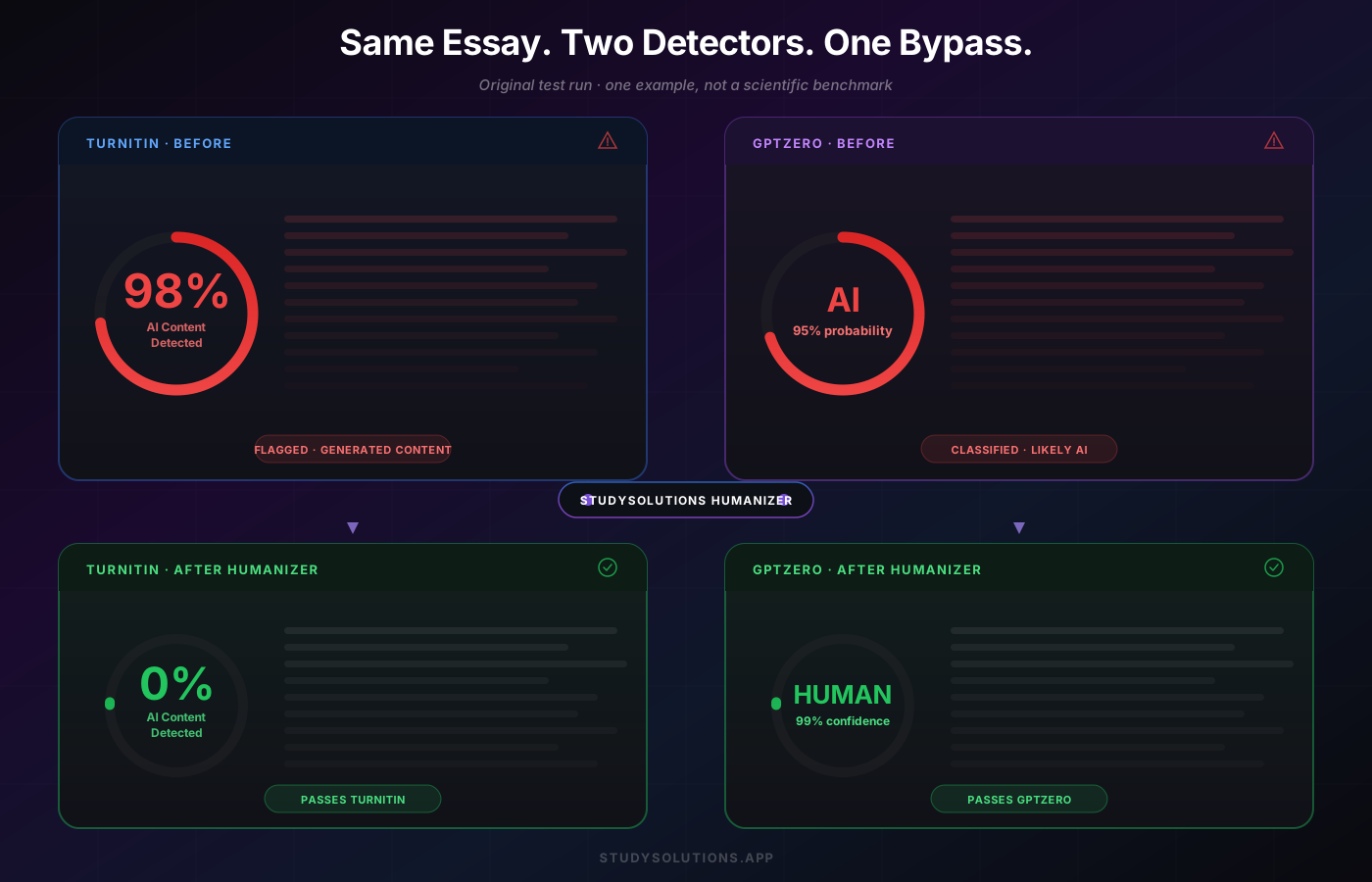
Honest disclosure: this is one test run, not a peer-reviewed benchmark. Different topics, longer essays, and different prompts will produce slightly different numbers. But the pattern shows the shared blind spot clearly: surface changes do not move either detector, and deep humanization clears both at once. Want to run your own test on your own essay? Use the free tier to check your essay for AI detection before you submit.
Which One Is Harder to Beat?
Now the answer everyone scrolled here for. The honest verdict has two parts, depending on which detector your school actually uses — and a third part that matters more than either of them.
Verdict 1 — Turnitin is harder to escape
If your professor uses Turnitin (and most do), Turnitin is harder to escape than GPTZero — not because the algorithm is sharper, but because it is bundled into the submission workflow. Every assignment gets checked automatically the moment you click Submit. There is no version of “I just won't use it.” You are using it whether you know it or not.
Verdict 2 — GPTZero catches what Turnitin misses
If your professor uses GPTZero (or runs it as a secondary check after Turnitin), GPTZero sometimes catches borderline cases Turnitin's classifier waves through. It is tuned a little more aggressively on shorter passages, which means a 30%-flagged section in Turnitin can come back at 60% in GPTZero on the same text.
The honest nuance: both detectors share the same core signals, so picking “which one to worry about” mostly misses the point. If you only beat one, you are still exposed to the other. If you only beat them with surface tricks, you are exposed to both. The framing students should care about is not “which is harder” but “which method beats both at once.”
The good news: defeating one means defeating both, if you use the right tool. Because the two detectors look at the same statistical layer, a humanizer that transforms perplexity and burstiness clears both reports from a single pass. That is what the next section walks through.
How to Beat Both: The Universal Bypass
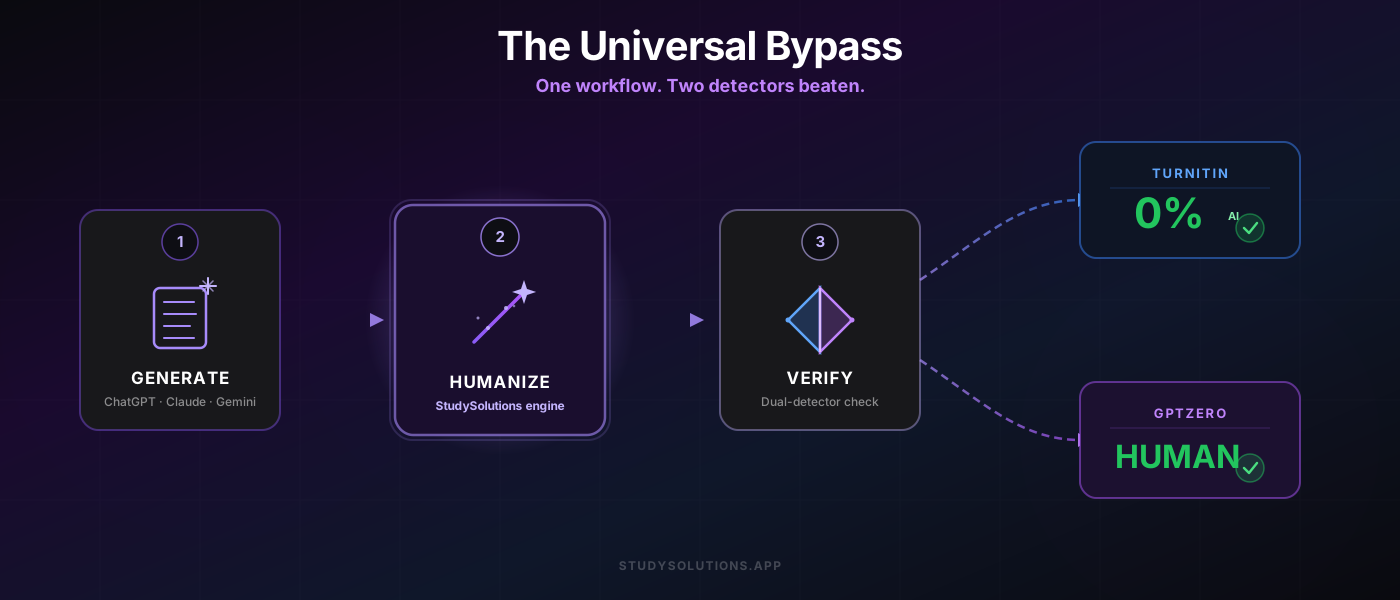
One workflow, two detectors defeated. Three steps: generate, humanize, verify. The reason this works on both Turnitin and GPTZero at the same time is that you are not chasing per-detector tricks — you are transforming the shared statistical signals both detectors were built to measure.
Step 1 — Generate Your Draft With Any AI
Write your essay, research paper, or assignment with whatever AI tool you prefer. ChatGPT, Claude, Gemini, Llama, an open-source model — it does not matter. The humanization step targets universal patterns shared across every modern LLM, not model-specific signatures.
Focus on content quality, not on trying to make the output “sound human.” Give your AI tool a detailed prompt with your thesis, your evidence, and your structural requirements. A substantive draft humanizes more cleanly than a thin one. Skip the manual editing loop — it is wasted effort that the humanizer redoes correctly anyway.
Step 2 — Humanize With StudySolutions
Open the StudySolutions AI Humanizer, paste your AI draft, and click Humanize. In 15 to 30 seconds the tool rewrites your essay at the statistical level — restructuring token sequences, restoring natural burstiness, and raising perplexity into the human range across every sentence.
This is the step where the universal bypass actually happens. Because Turnitin and GPTZero look at the same signals, transforming those signals once defeats both at once. You do not need to humanize twice or pick a Turnitin-mode versus a GPTZero-mode. The same humanized output is the answer for both detectors. For more on the underlying technique, see our deep dive on how to humanize AI text to bypass detection.
Step 3 — Verify Against Both Detectors
Run the humanized text through the StudySolutions Turnitin Checker to see the exact same Turnitin AI detection report your professor will see — same engine, same scoring, sentence-by-sentence breakdown. Then optionally drop the same text into GPTZero's free public tool at gptzero.me for a second confirmation. When both detectors come back clean, you are done.
This dual-verification step is what turns the bypass from “hopefully it works” into “I have proof.” You see the actual numbers from both detectors before you submit. If Turnitin shows 0% but GPTZero flags a few sentences (rare, but possible on highly technical content), you can re-humanize those sections and verify again. For the full step-by-step flow, see our guaranteed Turnitin bypass guide.
Plans and Pricing
StudySolutions offers a free tier for the AI humanizer, plus standalone Turnitin Pass plans and full Study Pass bundles. GPTZero verification is free at gptzero.me, so we do not bundle a GPTZero checker — you use the free public tool for that second confirmation. Here is how the StudySolutions options break down.
| Feature | Basic Free | Turnitin Pass $1.45/wk | Turnitin+ Pass $2.49/wk | Study Pass $4.50/wk | Study Pass+ $9.95/wk |
|---|---|---|---|---|---|
| Turnitin Checks | — | 2/week | 5/week | 3/week | 10/week |
| AI Humanizer | 500 words lifetime | — | — | 50,000/week | 250,000/week |
| GPTZero Verification | Free at gptzero.me | Free at gptzero.me | Free at gptzero.me | Free at gptzero.me | Free at gptzero.me |
| AI Detection Report | Included | Included | Included | Included | Included |
| Document Unlocks | — | — | — | Included | Included |
Most popular for the “beat both” workflow: the Study Pass at $4.50/week. You get 50,000 humanizer words and 3 Turnitin checks per week — enough to humanize and verify multiple essays — and you pair it with free GPTZero verification at gptzero.me. If you only need Turnitin score checking, the standalone Turnitin Pass at $1.45/week covers 2 checks.
Every paid plan is billed weekly — cancel anytime, no contracts, no commitments. Compare every option on the pricing page.