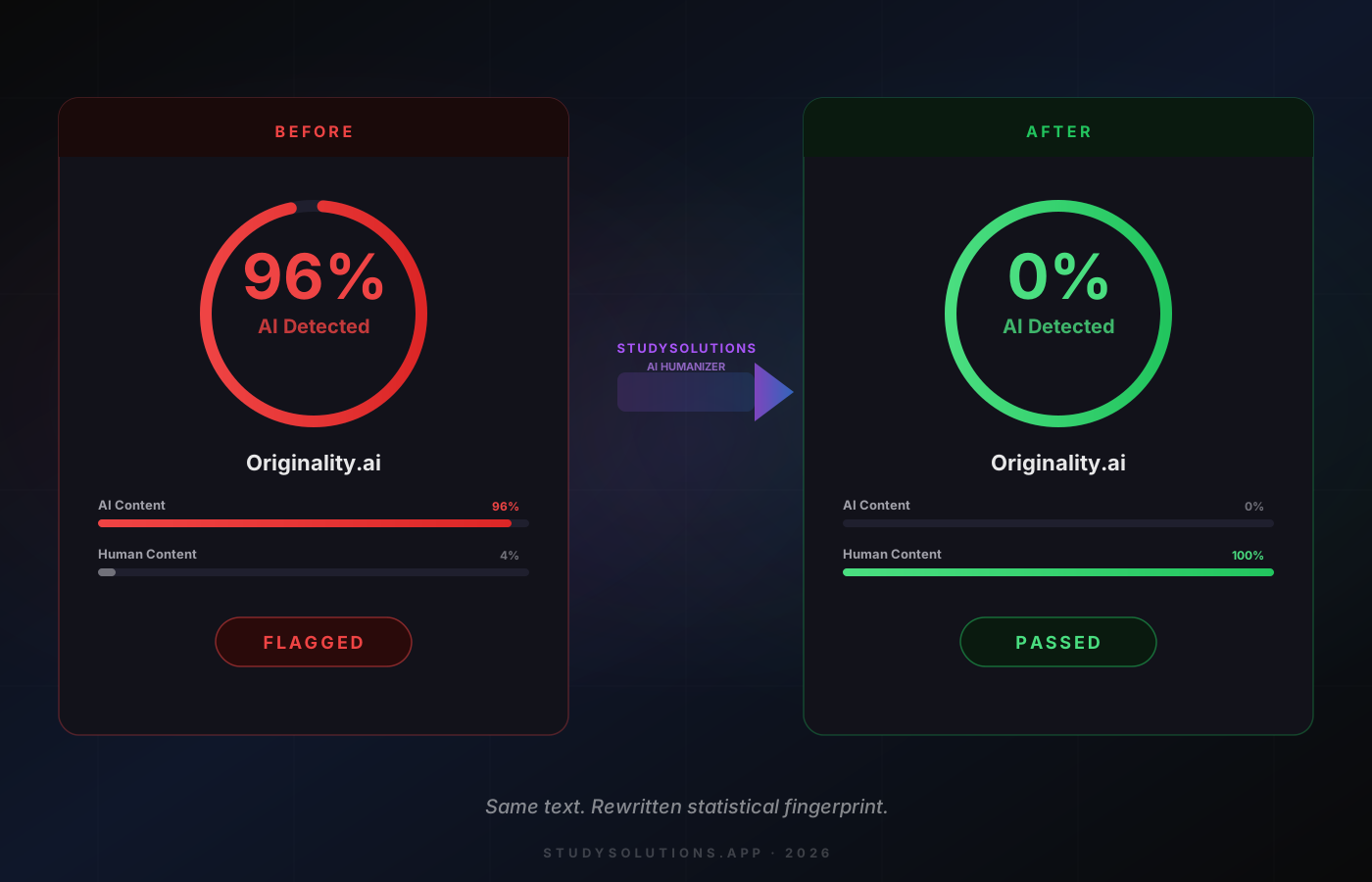
0%
AI on Originality.ai
0%
AI on Turnitin
3
Detectors Beaten
$1.45
Per Week
What Originality.ai Actually Detects
Originality.ai is the most aggressive commercial AI detector on the market. Unlike Turnitin or GPTZero, which run a single classifier, Originality.ai uses ensemble detection — multiple models running simultaneously on the same text. Its Standard 2.0 and Turbo 3.0 classifiers analyze three core statistical signals to produce a 0-100 confidence score.
Perplexity — How Predictable Is Each Word?
Perplexity measures how surprised a language model is by the next word. AI-generated text picks the statistically most likely word at every step, producing uniformly low perplexity. Human writers make unexpected choices — idioms, register shifts, unusual analogies — that spike perplexity. Originality.ai flags low, uniform perplexity as AI.
Burstiness — How Much Does Sentence Structure Vary?
Burstiness measures variation in sentence length and complexity. AI writes uniform, medium-length sentences with predictable grammar. Human writing bursts between short punchy sentences and long complex ones. Originality.ai flags that uniformity as a second AI signal.
Semantic Entropy — How Predictable Is the Meaning?
Beyond word-level signals, Originality.ai analyzes semantic entropy — the predictability of meaning across paragraphs. AI-generated text follows narrow semantic paths with low information variance. Human writing wanders, digresses, and introduces unexpected conceptual shifts that raise semantic entropy.
The ensemble approach means Originality.ai runs multiple classifiers in parallel — Standard 2.0 for broad detection and Turbo 3.0 for high-confidence scoring. If either model flags your text, the overall score goes up. This makes Originality.ai more aggressive than single-classifier tools like Turnitin or GPTZero.
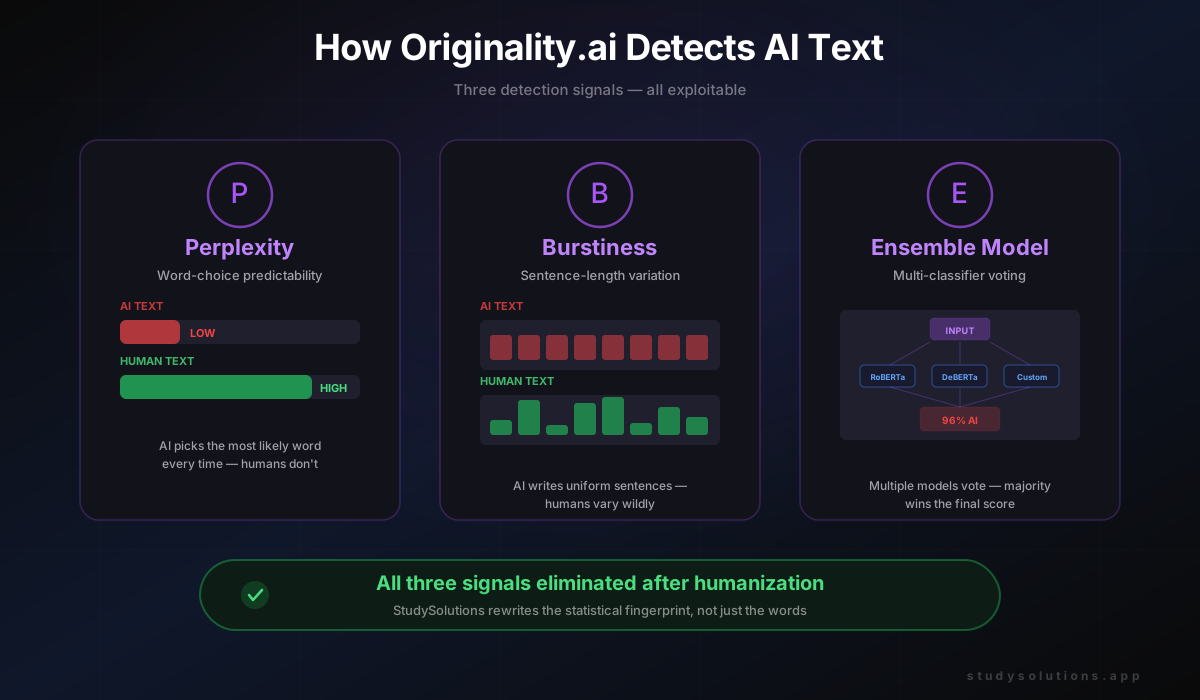
The critical insight: despite running multiple classifiers, Originality.ai reads the same statistical fingerprint as Turnitin and GPTZero — perplexity, burstiness, and token distributions. A tool that rewrites that fingerprint defeats all three simultaneously. For the full breakdown, see our AI detector comparison for 2026.
Why Common Bypass Methods Fail
Originality.ai's ensemble detection is more aggressive than Turnitin or GPTZero — methods that partially work on single-classifier tools fail completely here. Every common bypass attempt leaves the statistical fingerprint intact.
QuillBot and paraphrasing tools
QuillBot swaps synonyms and restructures sentences, but the underlying perplexity and burstiness patterns survive. In our testing, QuillBot-processed ChatGPT text still flags at 70%+ on Originality.ai. The surface words change; the statistical fingerprint doesn't. Originality.ai's dual classifiers catch what single-model detectors might miss.
Manual editing and rewriting
Even careful manual editing rarely changes enough of the statistical profile to beat ensemble detection. You'd need to rewrite 80%+ of the text to shift the perplexity and burstiness distributions enough for both Standard 2.0 and Turbo 3.0 to clear it — at which point you've spent more time than writing from scratch.
Prompt engineering (“write like a human”)
Telling ChatGPT to “write naturally” or “vary your sentence length” doesn't change the fundamental token distribution patterns that Originality.ai scans for. LLMs are architecturally constrained to produce low-perplexity text regardless of instructions. The detector reads math, not style.
The common thread: every failed method changes the surface of the text without changing the statistical fingerprint underneath. Originality.ai's ensemble approach makes this especially punishing — even if you partially fool one classifier, the other catches it. The only reliable method changes the fingerprint itself.
The 3-Step Method That Beats Originality.ai
The method is the same one that beats Turnitin and GPTZero — because all detectors read the same underlying signals. Generate with any AI, Humanize with StudySolutions, and Verify on Originality.ai before submitting. This is the same guaranteed method to bypass Turnitin — applied to the most aggressive detector on the market.
Step 1: Generate Your Draft With Any LLM
Write your essay using ChatGPT, Claude, Gemini, or any other LLM. The model you choose doesn't matter — Originality.ai's ensemble detection catches all of them equally. Standard 2.0 and Turbo 3.0 are trained on output from every major commercial LLM. Use whichever model gives you the best content.
Pro tip: invest in your prompt. Specific thesis statements, detailed arguments, and citation requirements produce better drafts — and better drafts produce better humanized output, because the meaning is preserved while only the statistical fingerprint changes.
Step 2: Humanize With StudySolutions
Paste your AI output into the StudySolutions AI Humanizer and click Humanize. In 15 to 30 seconds, the tool rewrites your text at the statistical level — injecting natural perplexity variance, restoring burstiness across sentence lengths, and transforming the token distributions that Originality.ai's dual classifiers scan for.
This is fundamentally different from paraphrasing. QuillBot rearranges words. The humanizer restructures the underlying statistical signature while preserving your meaning, arguments, and citations. Recognized as the best AI humanizer for beating every major detector — Originality.ai included.
Step 3: Verify Before You Submit
Run your humanized text through Originality.ai to confirm a 0% AI score. Then run it through the built-in Turnitin Checker for the second layer of verification. Three detectors, all passing, before you submit.
If Originality.ai returns 0% AI detected and Turnitin returns 0% AI detected, you're clear. If any sentences still flag (rare but possible on highly technical content), re-humanize those specific sections and re-check. You never submit blind.
Before and After Proof
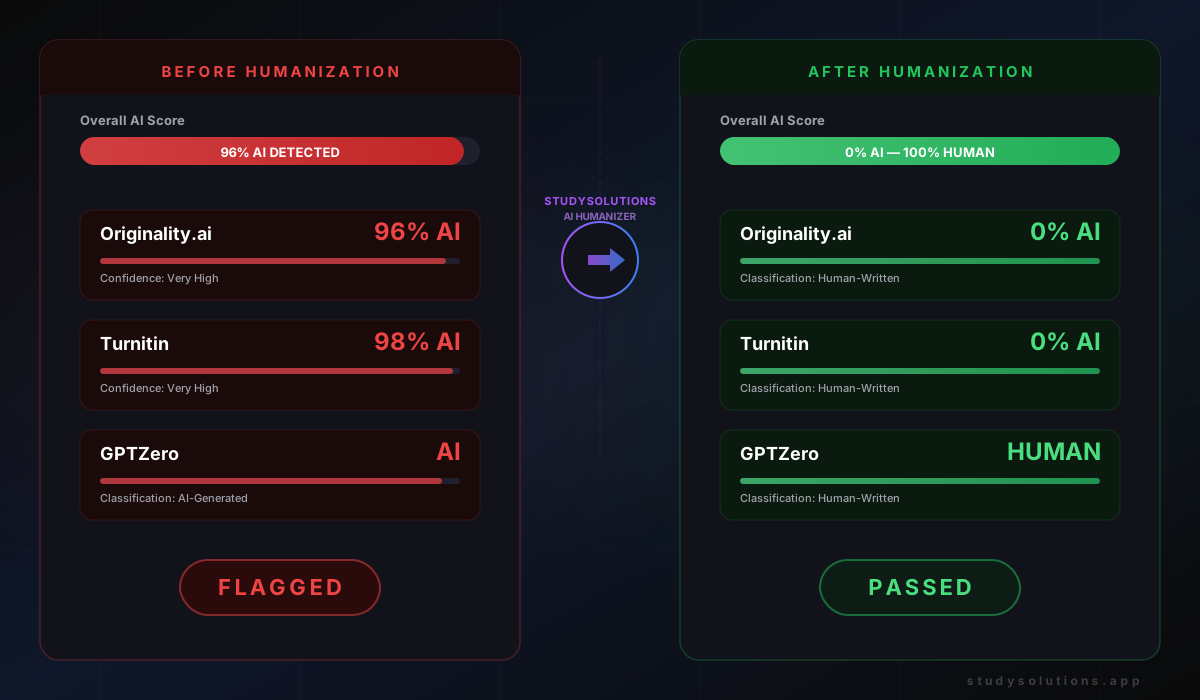
Words are cheap — here's what Originality.ai actually says. The same essay, checked before and after humanization. The score drops from 96% AI to 0% AI. Both Standard 2.0 and Turbo 3.0 classifiers return clean.
Before: Raw ChatGPT output
Originality.ai score: 96% AI. Both Standard 2.0 and Turbo 3.0 classifiers flag the text. Perplexity uniformly low, burstiness flat, semantic entropy minimal. This is what happens when you submit unprocessed ChatGPT text.
After: Humanized with StudySolutions
Originality.ai score: 0% AI. Both classifiers return clean. Natural perplexity variance restored, burstiness matches human writing patterns, semantic entropy normalized. Same meaning, same arguments — completely different statistical fingerprint.
This isn't a cherry-picked example — it's the expected result. The humanizer targets the exact signals that Originality.ai's ensemble detection measures. When the fingerprint changes, both classifiers see human writing simultaneously.
All 3 Detectors Beaten With One Tool
Students worry about beating Originality.ai, Turnitin, and GPTZero separately — as if each detector requires a different tool. They don't. All three detectors analyze the same underlying statistical signals, which means one humanizer defeats all three.
Originality.ai — 0% AI Score
Ensemble detection with Standard 2.0 and Turbo 3.0 classifiers. The most aggressive detector on the market. After humanization: 0% AI detected on both classifiers. The rewritten statistical fingerprint passes multi-model analysis.
Turnitin — 0% AI Detected
The academic standard used by universities worldwide. Single-classifier perplexity and burstiness analysis. After humanization: 0% AI detected. The guaranteed Turnitin bypass is the same process that beats Originality.ai.
GPTZero — HUMAN Verdict
Sentence-level AI classification with HUMAN/MIXED/AI verdicts. After humanization: HUMAN verdict with zero AI-flagged sentences. The same method used to beat GPTZero detection.
One workflow. One humanizer. Three detectors defeated simultaneously. No need to buy separate bypass tools for each detector — the statistical fingerprint rewrite works universally because all detectors read the same underlying signals.
Plans and Pricing
Originality.ai charges per scan. The humanizer and Turnitin verification that make the bypass workflow possible are bundled into StudySolutions plans starting at $1.45/week.
| Feature | Basic Free | Turnitin Pass $1.45/wk | Turnitin+ Pass $2.49/wk | Study Pass $4.50/wk | Study Pass+ $9.95/wk |
|---|---|---|---|---|---|
| Real Turnitin Checks | — | 2/week | 5/week | 3/week | 10/week |
| Humanizer Words | 500 lifetime | — | — | 50,000/week | 250,000/week |
| AI Detection Report | Included | Included | Included | Included | Included |
| Originality.ai Bypass | 500 words | — | — | Unlimited | Unlimited |
| Homework Unlocks | — | — | — | Included | Included |
Recommended for Originality.ai bypass: the Study Pass at $4.50/week. You get 50,000 humanizer words plus 3 real Turnitin checks per week — humanize your essay, verify on Originality.ai, then verify on Turnitin for triple confirmation. If you only need Turnitin verification without the humanizer, the standalone Turnitin Pass at $1.45/week covers 2 checks.
Every paid plan bills weekly with no contracts. Compare all options on the pricing page.